About Us
Sigma AML is a boutique consultancy firm led by seasoned professionals in financial crime compliance. We provide tailored advisory services and practical solutions to assist reporting entities in fulfilling their financial crime obligations.
15+ years
With over 15 years of experience across global banks, fintech firms, and gambling industries, our team delivers expert advice and innovative solutions while preserving optimal customer experience.
Where our experience comes from
- Global banks
- Fintech firms
- Gambling industries
Our Expertise
- Financial crime risk assessments (customers, products, jurisdictions)
- Policy and standards development
- Risk-based systems, processes, and controls design
Our Mission
We help reporting entities save time and effort, so they can focus on their core business while staying compliant.
Tranche 1 Entities (Current)
- Non-bank financial institutions
- Money remitters
- Gambling and wagering operators
Tranche 2 Entities (From July 2026)
- Legal professionals
- Accounting firms
- Conveyancers & Real estate agencies
- Trust and company service providers
- Dealers in precious metals and stones
Established or newly regulated, our expert team provides tailor-made solutions for compliance, risk management, and operational efficiency.
What is Financial Crime?
Financial crime involves illegal activities carried out by individuals or organisations to obtain financial gains or advantages. While money laundering and terrorism financing are the most well-known examples, financial crime also includes sanctions violations, bribery, and corruption. The impact of financial crime is both economic and social.
Global Impact
The United Nations Office on Drugs and Crime (UNODC) estimates that the total amount of money laundered globally each year ranges from 2% to 5% of global GDP, equivalent to approximately USD 800 billion to USD 2 trillion.
Growing Exposure Across Sectors
In recent decades, financial service providers, as well as other sectors such as real estate agencies, accounting firms, and corporate service providers have become increasingly exposed to financial crime risks. This is due to the fact that criminals are now far more sophisticated and technology savvy than in the past.
- Criminals are more sophisticated and technology-savvy
- Expanded sectors now exposed beyond traditional financial services
- Constantly evolving crime methods and techniques
- Cross-border nature of modern financial crime
The Solution
As financial crime risks are constantly evolving, reporting entities must implement risk-based systems, processes, and controls to effectively identify, manage, and mitigate these risks across their operations, including subsidiaries and affiliates.
Doing so ensures compliance with applicable Anti-Money Laundering and Counter-Terrorism Financing (AML/CTF) regulations and other financial crime obligations, while also helping organisations avoid regulatory penalties, reputational damage, and operational disruptions.
Stages of financial crime
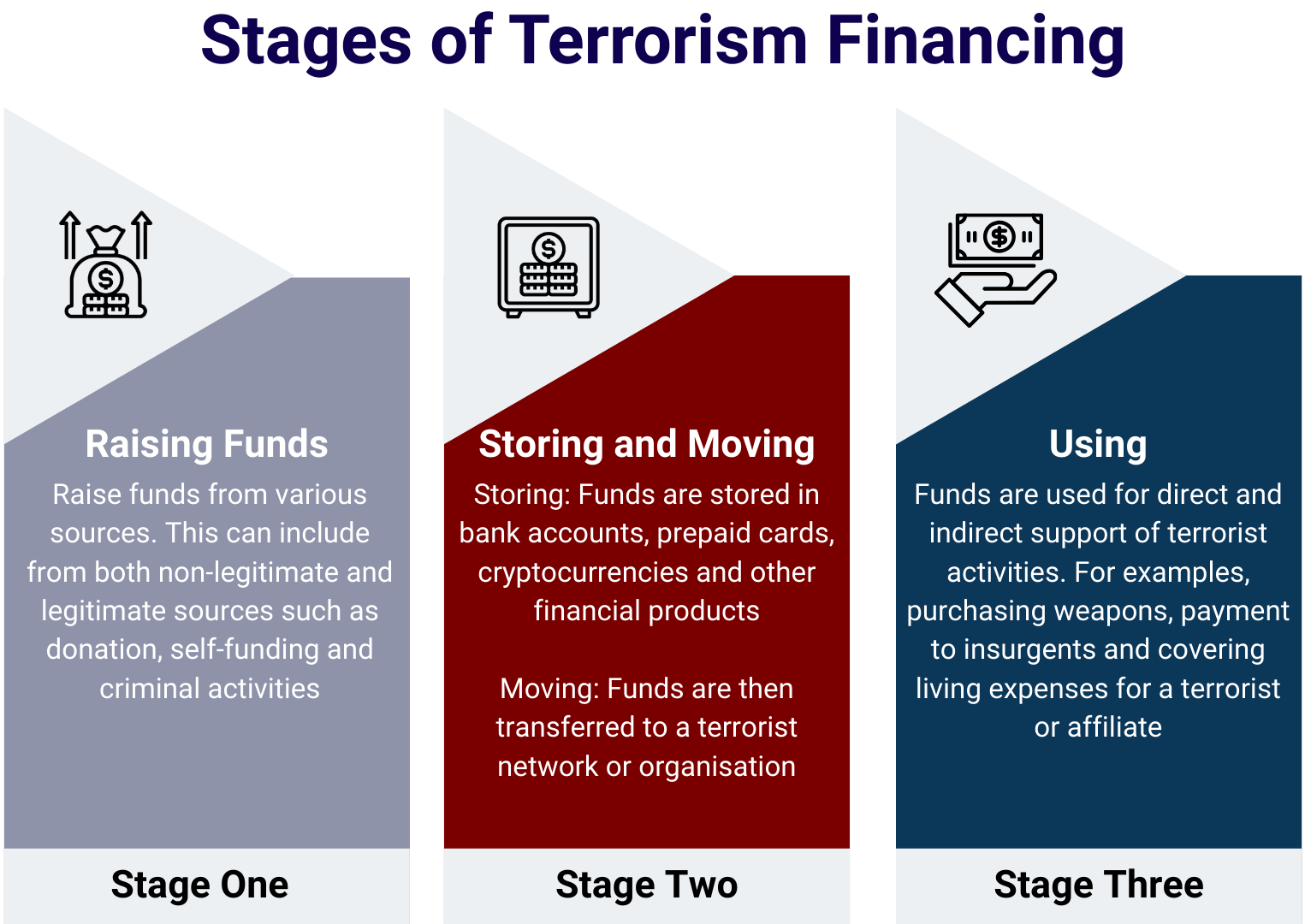
Stages of Terrorism Financing
Terrorism financing moves through three stages. Funds are first raised from legitimate and non-legitimate sources, such as donations, self-funding and criminal activities. They are then stored in bank accounts, prepaid cards, cryptocurrencies and other financial products, and moved to a terrorist network or organisation. Finally, they are used to support terrorist activity directly or indirectly, from purchasing weapons to covering living expenses.
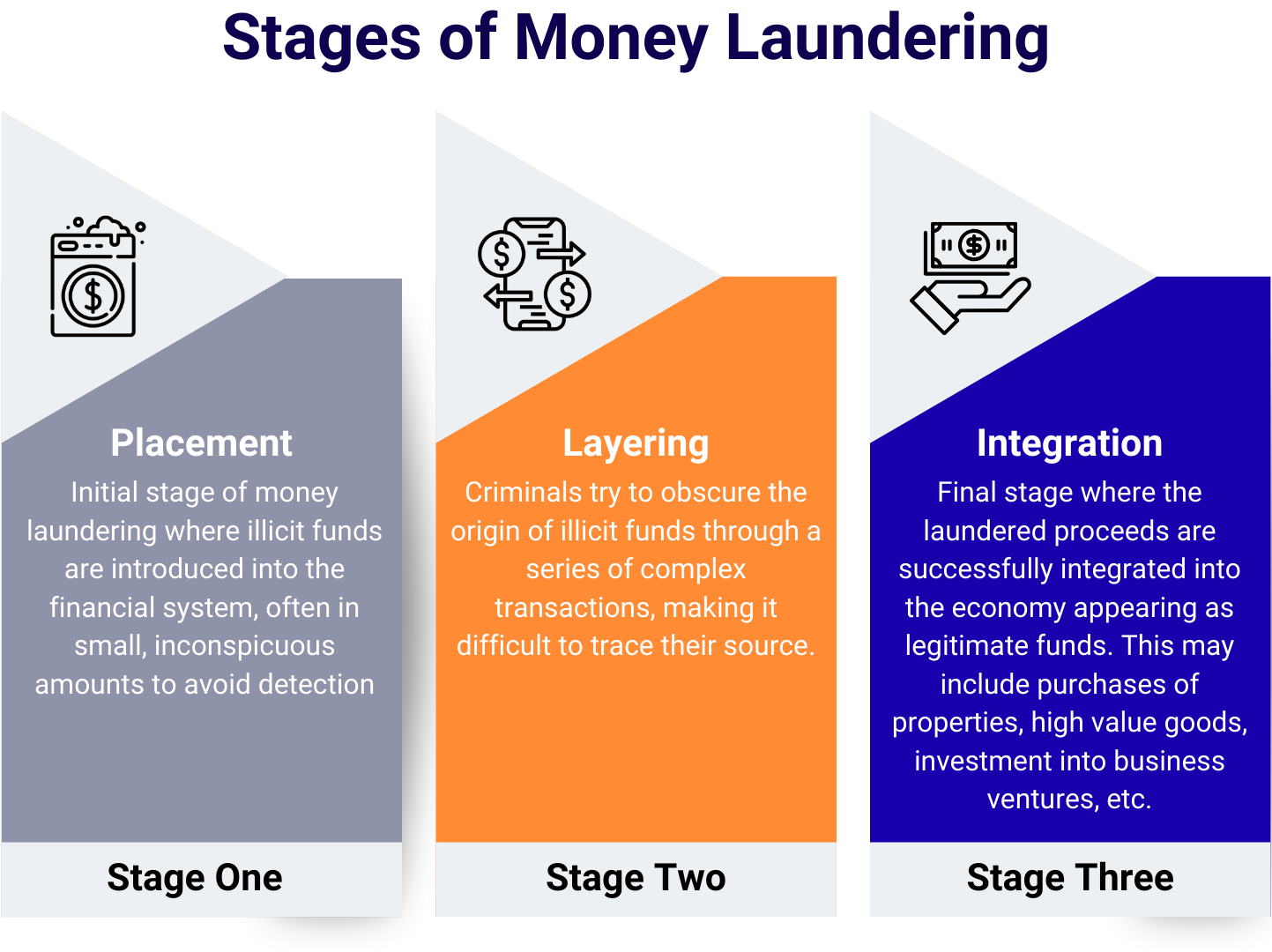
Stages of Money Laundering
Money laundering also runs in three stages. In placement, illicit funds enter the financial system, often in small, inconspicuous amounts to avoid detection. In layering, criminals pass the funds through a series of complex transactions to obscure their origin. In integration, the laundered proceeds re-enter the economy as legitimate funds, through purchases of property, high-value goods or investment in business ventures.